
cumulative data-production experience
VISION AI DATA INFRASTRUCTURE
Beyond detection.Understand context.
Real-world event datasets for training and evaluating Physical Security AI.
RenderWorks is a Vision AI data infrastructure company that designs, captures, structures and validates real-world datasets for AI training and evaluation, with a current focus on Physical Security AI.
01 / EXPERIENCE
Real-world experience,measured in data.
RenderWorks and its core team have worked across controlled scenario capture, multi-camera footage, multimodal sources, and structured annotation workflows.
real-world capture experience
RenderWorks + core-team experience
EXPERIENCE ACROSS
- CONTROLLED EVENT SCENARIOS
- MULTI-CAMERA VIDEO
- RGB · IR · DEPTH
- TEMPORAL · BBOX · POSE · ROI
Figures combine RenderWorks project experience and prior experience of the core team. Detailed project references are shared where disclosure permits.
02 / FAST REAL-WORLD BUILD
3,000 real-world clips,built on a practical baseline.
Reference configuration: 2+ cameras, controlled real-world capture, clip editing, metadata, and scoped GT / Map / geometric labels. Additional sensors, dense annotations, augmentation, and synthetic data are extended by project scope.
12-hour day + night controlled capture
baseline multi-camera configuration
reference real-world dataset scale
capture → edit → scoped annotation → QA
Reference production target, not a fixed SLA. Timing and output vary with location access, event complexity, annotation density, and additional sensor requirements.
03 / FROM FOOTAGE TO STRUCTURE
Structure what happened,not just what appeared.
One real-world event becomes progressively more useful to AI as temporal context, roles, objects, interactions, and geometry are structured around the source footage.
PRIMARY
LAPTOP THEFT
Context establishes role before the removal event is interpreted.
OPEN BENCHMARK SAMPLE
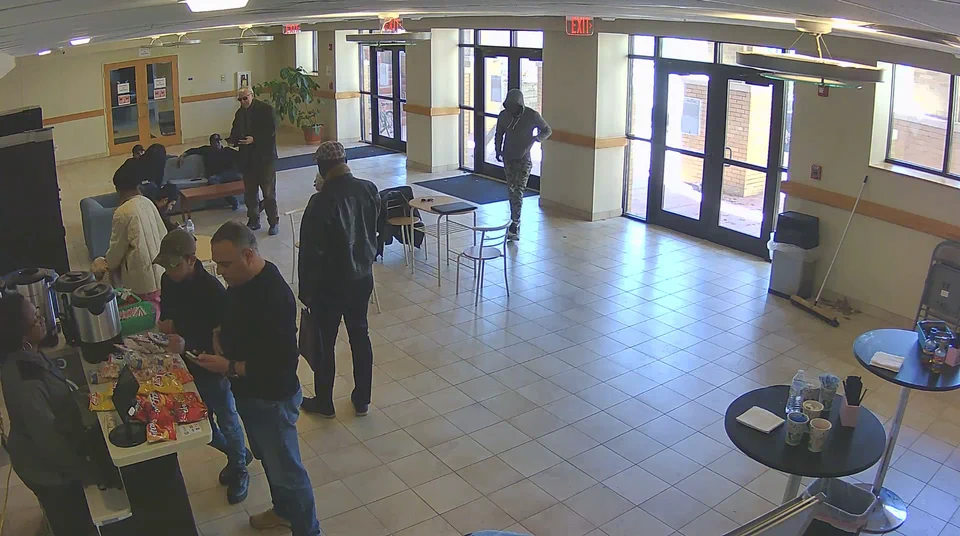
- 01CONTEXT
Read movement and roles before the short event.
- 02ROLES + MOVEMENT
Connect accumulated movement context across owner and actor.
- 03OBJECT
Isolate the laptop as an object.
- 04STRUCTURE
Use pose and scene boundaries to narrow the interaction.
- 05SPACE
Derive spatial relationships with ESTIMATED DEPTH.
- 06STATE CHANGE
Confirm the laptop's disappearance through the before-and-after state change.
The same structuring method follows a different interaction: an object left behind.
SECONDARY
OBJECT ABANDONMENT
Hand and object evidence make the state transition visible around the event clip.
OPEN BENCHMARK SAMPLE
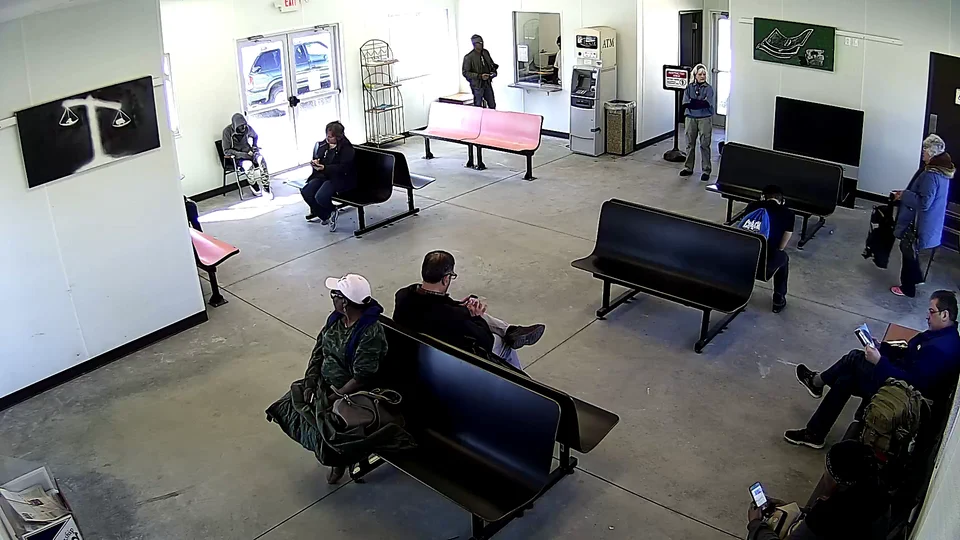
- 01EVENT
Find the interaction within the short action interval.
- 02HAND + OBJECT
Narrow the view to the hand ROI and bag object.
- 03HAND / OBJECT SEPARATION
Connect the change as the hand and object move apart.
- 04STRUCTURE
Use pose and scene boundaries as bounded evidence.
- 05SPACE
Derive spatial relationships with ESTIMATED DEPTH.
- 06STATE CHANGE
Confirm the bag was left behind through the before-and-after state change.
VIDEO + ANNOTATION + METADATA + PROVENANCE + QAMODEL-READY DATA
Open benchmark footage used for demonstration. The displayed evidence is the result of annotation work performed by RenderWorks on the original footage.
04 / PRODUCTION PIPELINE
Capture. Inspect.Edit. Validate.
RenderWorks operates data production as one repeatable workflow from controlled field capture to dataset QA and delivery readiness.
- 01CAPTURE
Reproduce the required event in the real world.
Scenario design · controlled environment · actors · camera plan · day / night conditions
OUTPUTSOURCE FOOTAGE - 02INSPECT
Verify that the inputs can support the intended dataset.
Media integrity · camera relation · sync · metadata · scenario correspondence
OUTPUTVERIFIED INPUTS - 03EDIT
Turn source footage into structured event data.
Event clips · temporal GT · BBox · Pose · ROI · segmentation · geometry · metadata
OUTPUTSTRUCTURED DATASET - 04VALIDATE
Check the final package before evaluation or delivery.
File / metadata consistency · GT relation · visual review · QA · evaluation readiness
OUTPUTDELIVERY-READY DATA
Internal software supports the pipeline, but the production workflow—not the application UI—is the public product evidence.
05 / HUMAN-IN-THE-LOOP
HUMAN-IN-THE-LOOP DATA PRODUCTION
Automate repetition.Review ambiguity.
Internal tooling reduces repetitive production work while ambiguous evidence remains subject to explicit human review.
Sync, clipping, structured inputs, proposal generation, and deterministic checks are supported by internal tools.
Occlusion, role ambiguity, event boundaries, multi-person scenes, and model-assisted proposals are reviewed before final GT is accepted.
06 / RW DATASET
OPEN DATASET IN PREPARATION
RW DatasetComing Soon.
An open real-world event dataset for Physical Security AI research is currently in preparation.
Designed for reuse across broader research and public benchmarking. Release scope, license, and annotation details will be announced with the dataset.
Discuss a Dataset Project